Back to top
+216 73 277 600
Examinations Surgery Technology Expertise
Eye surgery ARGON laser ARGON laser Book an appointment

ARGON laser

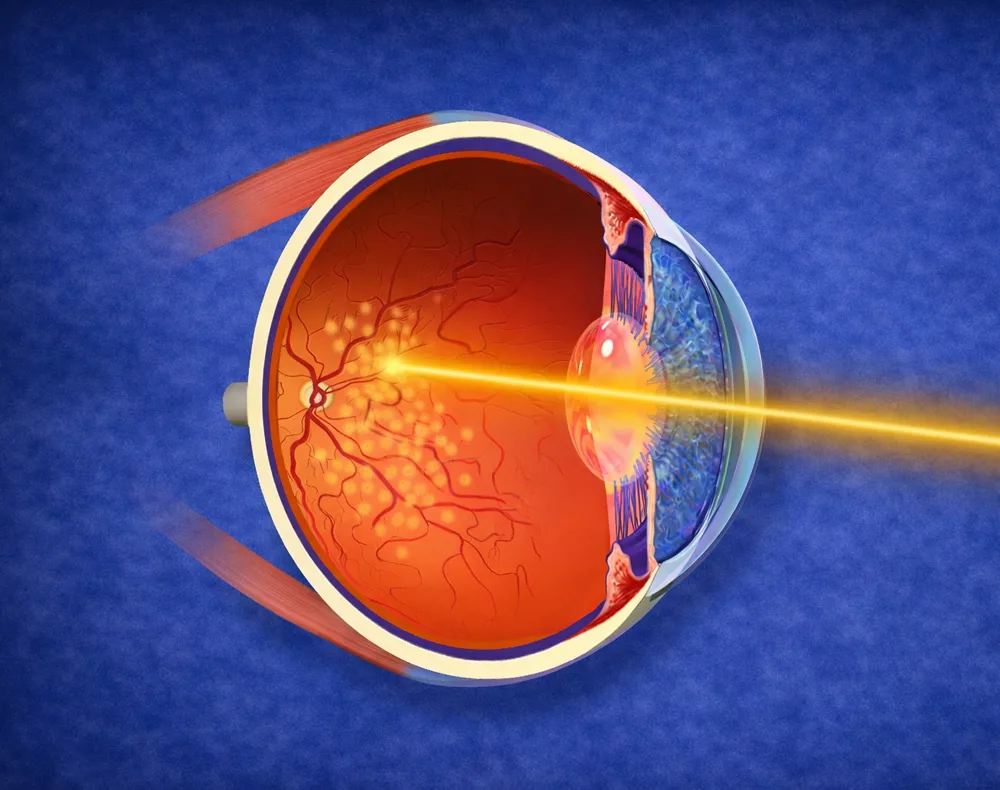
The Argon laser is a precise therapeutic retinal photocoagulation technique used to stabilize and protect vision in several eye diseases, particularly diabetic retinopathy, retinal tears , and certain vascular occlusions. Using highly precise, targeted monochromatic light energy, it can reinforce the retina, reduce the risk of hemorrhage, and prevent complications.

At Les Oliviers Eye Clinic in Sousse, Tunisia, Argon laser treatment is performed after a complete ophthalmic assessment. It is quick, carried out during an outpatient visit, and adapted to each patient to protect retinal health and maintain visual quality.

Purpose Treat or stabilize the retina
Principle Highly targeted laser spots
Key point Quick procedure, essential follow-up
When is the Argon laser used?

The Argon laser is best known for retinal photocoagulation. In practice, it may be proposed when a retinal area needs to be secured, when retinal distress related to poor oxygenation needs to be reduced, or when selected vascular lesions require treatment. The choice depends on your diagnosis, imaging such as retinal photography, OCT, and angiography, and the visual objective agreed with you.

  • Diabetic retinopathy: Panretinal photocoagulation (PRP) or focal treatment according to the indication.
  • Retinal tears, for prevention: A laser “barrier” around a fragile area to reduce risk.
  • Retinal vein occlusions: Depending on the case, treatment of ischemic areas and close follow-up.
  • Other situations: Selected retinal lesions according to medical advice.
Argon laser is a strategic treatment. It often aims to prevent a future complication and stabilize disease even when vision does not improve immediately.

How does it work?

The laser delivers tiny spots to defined areas. These spots create a localized reaction that helps control certain processes, including abnormal vessels, poorly oxygenated areas, and retinal weakness. The procedure is precise: only the areas requiring treatment are targeted, while healthy tissue is preserved as much as possible.

  • Localized treatment: Spots are distributed according to an individualized pattern.
  • Aim: stabilization: Reduce the risk of progression and complications.
  • Essential follow-up: Response is monitored, sometimes over several sessions.
Argon laser in Sousse, Tunisia

How the session is performed

Argon laser treatment is performed on an outpatient basis. You sit at the device, usually a slit lamp. Anesthetic drops may be used for comfort. In some cases, a special contact lens with gel is placed on the eye to target the retina more accurately. The session generally lasts a few minutes, depending on the area being treated.

  • Before: Assessment, explanation, and sometimes pupil dilation.
  • During: Flashes of light and, depending on the area, occasional brief pinprick sensations.
  • Afterwards: Temporary glare or blurred vision, followed by gradual recovery.
  • Follow-up: An appointment to assess effectiveness.
Is it painful?

Most patients describe moderate discomfort, including bright flashes and a brief sensation of heat. Some areas may be more sensitive, but the team adapts the pace and can pause when necessary.

Recovery and advice after Argon laser treatment

After the Argon laser session, glare or blurred vision for a few hours is common, especially if the pupil was dilated. Mild discomfort may persist. The most important point is to attend follow-up, because effective laser treatment also requires effective monitoring.

  • Visual rest: On the same day if light is uncomfortable.
  • Sunglasses: Very useful after dilation.
  • Associated treatments: Depending on the disease, eye drops, injections, metabolic control, and other measures.
  • Seek emergency care if you experience: significant pain, sudden loss of vision, a dark curtain, or numerous flashes or floaters.
For some indications, such as PRP, a temporary reduction in night or peripheral vision may occur. The doctor will explain the balance of benefits and risks for your situation.

Frequently asked questions

How many sessions are required?

This depends on the objective. A laser barrier may be completed in one session, while extensive treatment such as PRP may require one or more sessions to maintain comfort and precision.

Does the Argon laser replace intravitreal injections?

No. They are different treatment tools. Depending on the disease, one, the other, or a combination may be used. The plan is personalized according to the macula, blood vessels, and disease progression.