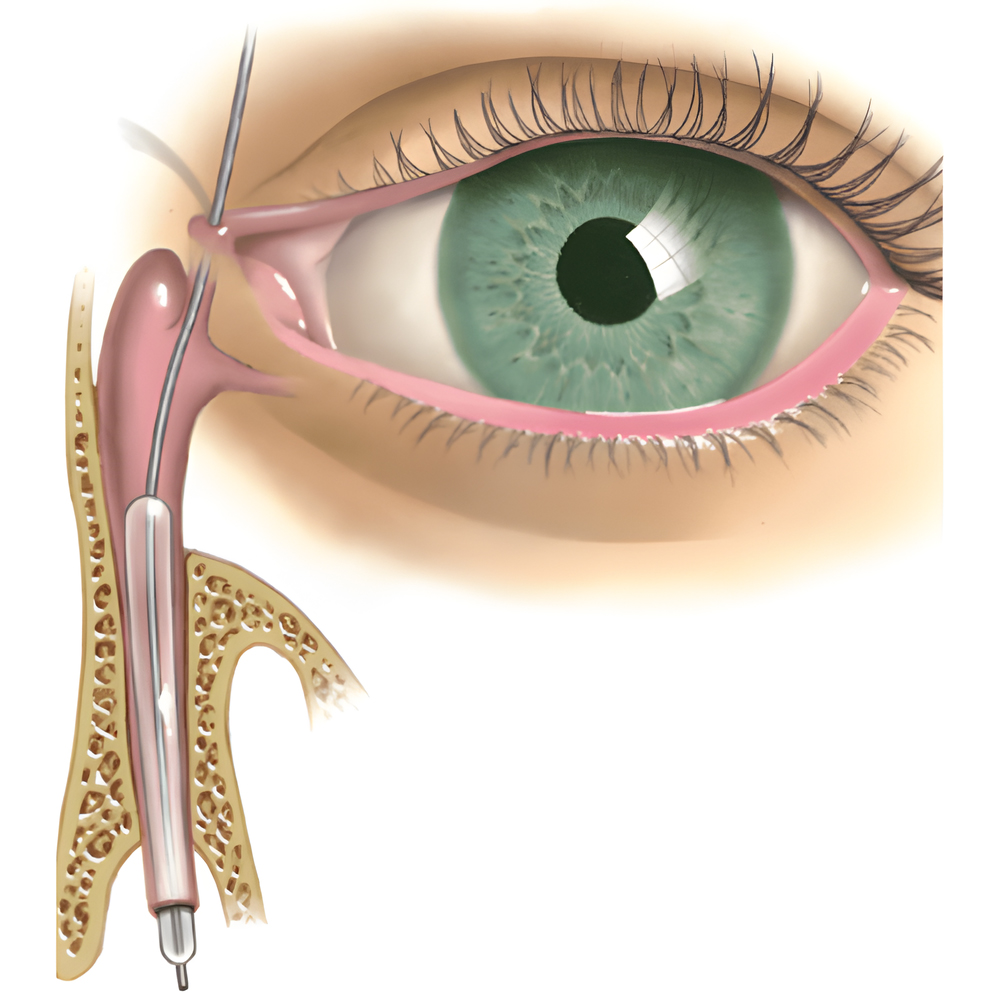
Tears follow a well-organized pathway: they lubricate the eye and then drain through tiny openings at the inner corner of the eyelids, called the lacrimal puncta, before reaching the nose. When this drainage “circuit” becomes blocked or narrowed, the most common symptom is tearing , with tears overflowing from the eye, sometimes accompanied by recurrent infections. At Les Oliviers Eye Clinic in Sousse, Tunisia, lacrimal duct surgery has a simple objective: restore effective drainage while protecting the eye and improving everyday comfort.
Lacrimal duct surgery
When should a lacrimal drainage problem be suspected?
A watery eye is not always caused by a drainage problem. Dry eye, allergy, or irritation can also trigger reflex tearing. The examination identifies the difference. When the lacrimal pathways are responsible, symptoms are often recurrent and mainly unilateral, affecting only one eye.
- Chronic tearing (epiphora): Especially in wind, outdoors, or without obvious irritation.
- Discharge or eyelids sticking together: Secretions on waking and discomfort at the inner corner.
- Recurrent infections: Inflammation of the lacrimal sac with painful redness.
- Swelling near the nose: At the inner corner; this requires prompt assessment.
Assessment before surgery
Success begins with an accurate diagnosis. We determine where the obstruction is located, whether at the punctum, canaliculi, lacrimal sac, or nasolacrimal duct, and why it has developed, such as inflammation, narrowing, or previous damage. The outpatient examination may be supplemented by patency tests and, when necessary, imaging.
- Eyelid examination: Position of the lacrimal puncta and quality of eyelid closure.
- Drainage tests: To check the passage of tears.
- Tailored plan: A different technique is selected according to the location of the obstruction.
Which surgical techniques are used for the lacrimal ducts?
There is no single “standard” operation. The choice depends on the level of the blockage and your individual situation. Sometimes a simple procedure is sufficient. In other cases, a new drainage pathway is created. The objective remains the same: allow tears to drain through the correct pathway over the long term.
Dilation of the lacrimal pathway: for partial stenosis
When the entrance to the drainage system is too narrow or partially blocked, the passage can be widened or restored. Depending on the case, temporary intubation with a small drainage tube helps keep the pathway open while healing occurs.
- Opening / widening: To make it easier for tears to enter the drainage system.
- Intubation: A small temporary drainage tube used to stabilize the result.
Creating a new pathway: complete stenosis
When the blockage is lower down, between the lacrimal sac and the nose, the reference technique consists of creating a new passage into the nasal cavity to bypass the blocked duct. The aim is to restore a functional pathway while limiting recurrence.
- Creation of a new drainage pathway: Bypass the obstruction and allow tears to drain into the nose.
- Essential follow-up: Check-ups and care to optimize healing.
Will the operation leave a scar?
This depends on the technique selected and the location of the procedure. In every case, the aim is to achieve a comfortable and lasting result with the most discreet appearance possible.
Postoperative recovery
Recovery varies according to the procedure. Discomfort at the inner corner, temporary tearing, or mild redness may occur. Eye drops and/or local care may be prescribed. If a small tube has been inserted, it is generally temporary and removed according to the protocol.
- Mild discomfort: Usually moderate and temporary.
- Local treatment: Eye drops and care according to the prescription.
- Scheduled check-ups: To confirm patency and adapt follow-up.
- Seek prompt medical attention if you experience: significant pain, fever, intense redness, loss of vision, or thick discharge.
Frequently asked questions
Why does my eye water if it is “dry”?
Dry eye can trigger reflex tearing because the eye produces tears in response to irritation. The assessment distinguishes dryness from a drainage problem, or identifies a combination of both.
Is treatment always surgical?
No. If the cause is irritation, allergy, or dryness, treatment is medical. Surgery is mainly discussed when there is an anatomical obstruction or recurrent infection.