Back to top
+216 73 277 600
Examinations Surgery Technology Expertise
Eye surgery YAG laser YAG laser Book an appointment

YAG laser

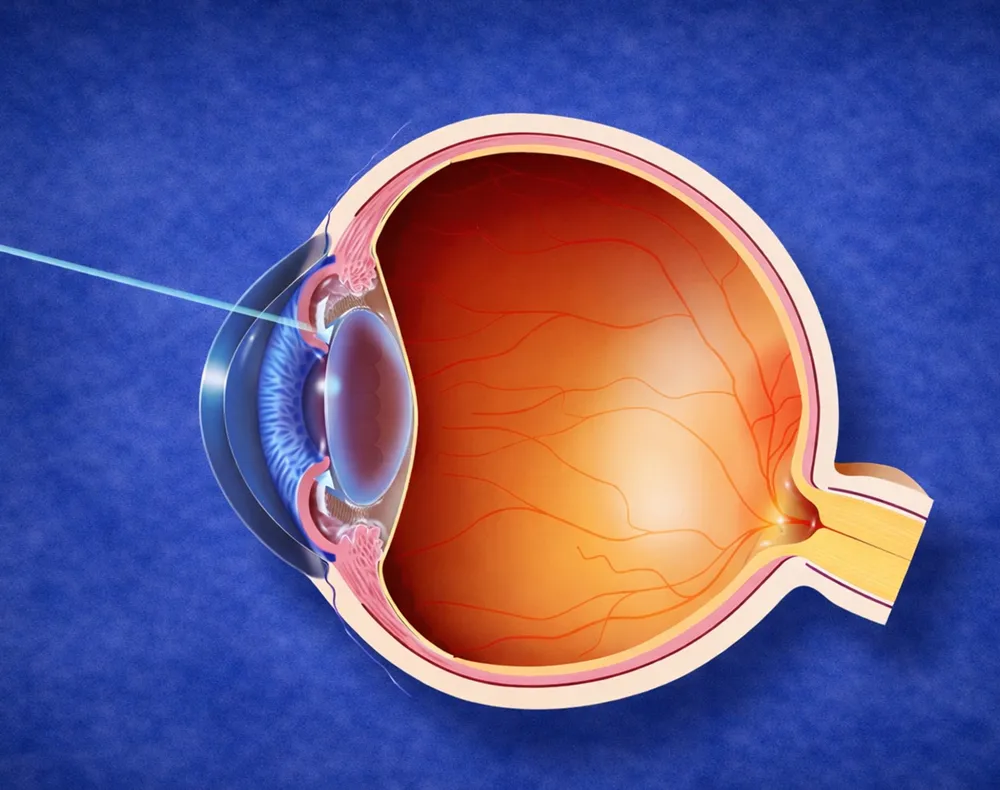
The YAG laser (Nd:YAG) is a highly precise ophthalmic laser used to perform targeted procedures without an incision. It is most often used in two situations: posterior capsulotomy after cataract surgery, when vision becomes cloudy again because of a “veil,” andiridotomy in certain forms of narrow-angle glaucoma to improve circulation of intraocular fluid. At Les Oliviers Eye Clinic in Sousse, Tunisia, YAG laser treatment is proposed after a complete examination, with a clear explanation of the expected benefit and follow-up after the session.

Purpose Relieve a targeted blockage
Principle Brief laser treatment without an incision
Key point Quick procedure + post-treatment check
The role of YAG laser treatment in glaucoma

The YAG laser is not a universal treatment. It is selected when it provides a direct solution to a clearly identified problem. The objective is often straightforward: make the path of light clearer through capsulotomy or improve pressure balance in selected anatomical configurations through iridotomy.

  • Posterior capsulotomy after cataract surgery: Treats secondary opacification that can recreate a sensation of a visual “veil.”
  • Peripheral iridotomy for narrow-angle glaucoma: Creates a tiny opening in the iris to improve circulation of the aqueous humor.
  • Other selected indications: Depending on the clinical context and specialist assessment.
YAG laser treatment is often part of a broader care pathway involving examinations such as OCT and visual field testing, eye-drop treatment, and above all regular follow-up.

YAG capsulotomy: when vision becomes cloudy after cataract surgery

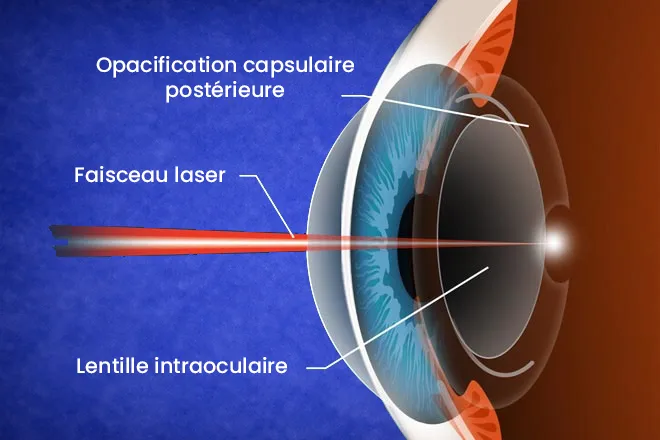
After cataract surgery, the implant is placed inside a thin natural envelope called the capsule. Over time, this capsule may become less transparent. Vision gradually decreases, as if mist had returned to the image, sometimes with increased glare. YAG laser capsulotomy creates a small central opening in the capsule so that light can pass through correctly again.

  • Expected result: Improved sharpness and contrast, often quickly.
  • Procedure: Brief laser pulses focused on the capsule, without an incision.
  • Afterwards: A check-up and sometimes anti-inflammatory eye drops according to the protocol.
YAG laser capsulotomy in Sousse, Tunisia

YAG iridotomy: a laser option for certain forms of glaucoma

In narrow-angle glaucoma or an eye at risk, the space through which fluid drains may be reduced. This configuration may create a blockage mechanism that encourages pressure to rise. YAG laser iridotomy creates a tiny passage in the iris, often hidden beneath the eyelid, to help fluid circulate more freely and reduce the risk of sudden angle closure. In many situations, the procedure is mainly protective and aims to make the eye safer.

  • Expected result: Rebalance internal circulation and secure the drainage angle.
  • Before: Assessment of the angle, pressure measurement, and appropriate eye drops.
  • Afterwards: Pressure check and confirmation that the opening is effective.
YAG laser iridotomy in Sousse, Tunisia
Does iridotomy replace eye drops?

Not always. It corrects a specific anatomical mechanism, but eye-drop treatment may still be required depending on the type of glaucoma and the target pressure.

How a session is performed

YAG laser treatment is performed on an outpatient basis, generally at the slit lamp. Anesthetic drops improve comfort, and a contact lens may be used to stabilize the eye and focus the laser more accurately. The procedure is quick, followed by a check to confirm stability, particularly of intraocular pressure.

  • Positioning: As for a standard examination: chin and forehead positioned while looking at a target.
  • Possible sensations: A bright flash, small clicking sounds, and brief discomfort.
  • Duration: A few minutes depending on the indication.
  • Check: Pressure measurement and assessment of the result.
If dilation was performed, vision may be blurred and light uncomfortable for a few hours. Bring sunglasses and avoid driving if your vision is affected.

When should you seek prompt medical attention after laser treatment?

Recovery is usually straightforward, but certain symptoms require immediate assessment:

  • Significant pain: Especially if the eye is very red or accompanied by nausea or faintness.
  • Sudden loss of vision: Or the appearance of a dark curtain.
  • Flashes + a shower of floaters: Signs that require prompt assessment.