Back to top
+216 73 277 600
Examinations Surgery Technology Expertise
Eye surgery Laser PPR Laser PPR Book an appointment

PPR laser | Photocoagulation

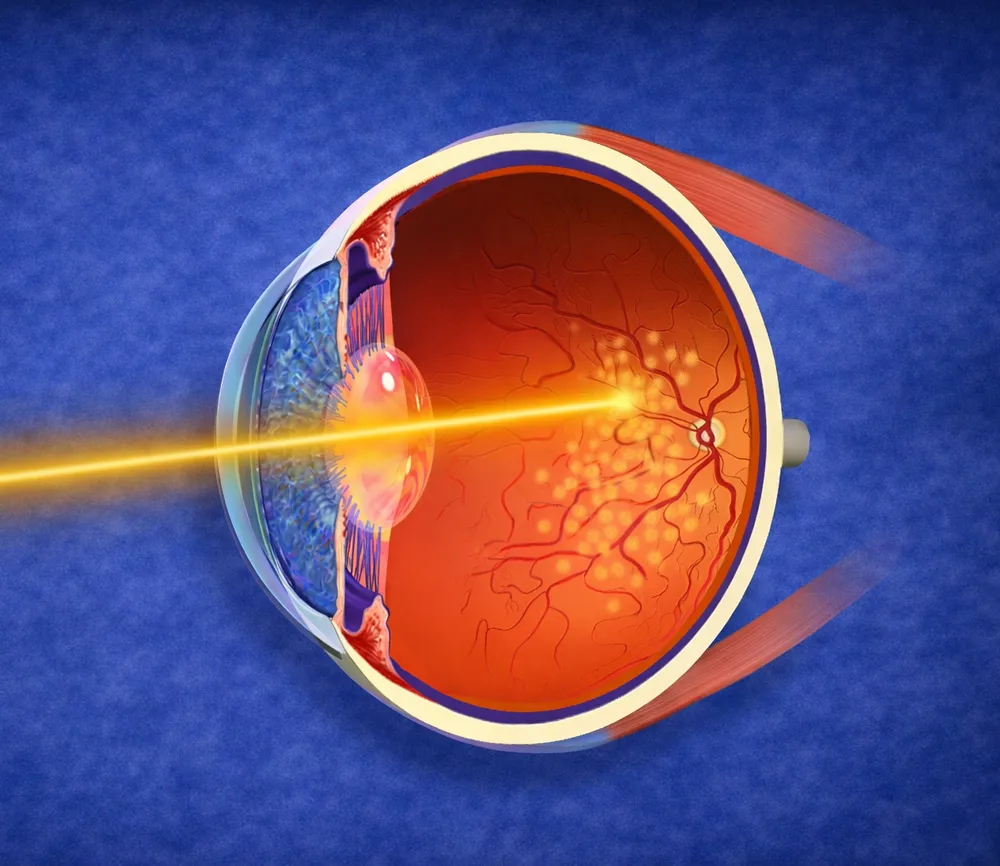
The PPR , or Panretinal Photocoagulation, is a retinal laser treatment, also called laser photocoagulation, performed to stabilize certain diseases in which the retina is deprived of oxygen and produces fragile blood vessels. The main objective is to reduce the risk of hemorrhage and complications that could threaten vision. At Les Oliviers Eye Clinic in Sousse, Tunisia, PPR is proposed after a complete assessment, including fundus examination, retinal photography, OCT, and sometimes angiography, so that the strategy can be adapted to each patient.

Purpose Prevent complications
Principle Laser spots in the peripheral retina
Key point Often performed over several sessions
Why is PPR performed?

Certain retinal diseases causeischemia, meaning that the retina receives less oxygen. This may trigger the formation of neovascularization , abnormal fragile blood vessels that can bleed. PPR aims to reduce this distress signal in order to cause these vessels to regress or limit their formation. The main benefit is often long-term protection of the eye.

  • Proliferative diabetic retinopathy: A common indication, reducing the risk of vitreous hemorrhage.
  • Selected retinal vein occlusions: Treatment of ischemic areas according to the assessment.
  • Other causes of retinal ischemia: According to specialist advice and imaging.
PPR is often a preventive strategy. It may protect future vision even when vision does not improve immediately.

How does PPR work?

The laser creates numerous spots in the peripheral retina while avoiding the central area responsible for fine vision. This reduces the oxygen demand of the peripheral retina and decreases the signals responsible for neovascularization. In simple terms, it calms the disease in order to limit complications.

  • Extensive treatment: Many spots distributed according to a precise pattern.
  • Central area preserved: The macula is avoided to protect fine vision.
  • Progressive result: Stabilization is assessed through follow-up and imaging.
Panretinal photocoagulation in Sousse, Tunisia

How the session is performed

PPR is performed on an outpatient basis. After eye drops are instilled for local anesthesia and sometimes pupil dilation, you sit at the slit lamp. A special contact lens may be placed on the eye to guide the laser. You will see bright flashes and may feel varying discomfort depending on the areas treated. Because treatment is extensive, it is commonly divided over several sessions for greater comfort.

  • Before: Assessment, explanation, and sometimes pupil dilation.
  • During: Flashes and laser spots distributed across the peripheral retina.
  • Afterwards: Temporary blurred vision or glare, followed by gradual improvement.
  • Follow-up: Clinical review and imaging to assess the response.
Is it painful?

Discomfort varies. Some spots are barely felt, while others are more sensitive. Treatment can be divided over several sessions, and the team adjusts the pace to improve comfort.

Possible effects and advice

After PPR, mild irritation, light sensitivity, or temporarily blurred vision may occur. In some cases, night vision or the peripheral field may be temporarily affected. The key point is follow-up, as this confirms stabilization and retinal safety.

  • Sunglasses: Useful after dilation or if light sensitivity occurs.
  • Rest and comfort: Avoid screens on the same day if glare is troublesome.
  • Associated treatments: Depending on the case, injections, eye drops, diabetic control, and other measures.
  • Emergency care if you experience: significant pain, sudden loss of vision, a dark curtain, or numerous flashes or floaters.
PPR protects the eye, but treatment is most effective when the underlying general disease is also well controlled, for example diabetes and blood pressure.

After SLT: practical advice

Recovery is generally straightforward. You may notice mild irritation, light sensitivity, or temporary blurred vision. Use prescribed drops and attend the follow-up appointment.

  • Resume your day: Often possible quickly, depending on your comfort.
  • Avoid rubbing the eye: Especially on the day of treatment.
  • Use prescribed eye drops: Usually for only a few days, when prescribed.
  • Seek emergency care if you experience: intense pain, sudden loss of vision, or redness.

Frequently asked questions

Why are several sessions required?

Because PPR requires many laser spots. Dividing treatment improves comfort and tolerance while maintaining optimum precision.

Does PPR improve vision?

The main aim is to prevent complications such as hemorrhage, traction, and visual loss. Depending on the situation, vision may stabilize or improve indirectly, but protection remains the priority.