Back to top
+216 73 277 600
Examinations Surgery Technology Expertise
Eye surgery Visual field test Visual field test Book an appointment

Visual field test

The visual field is everything you can see while looking straight ahead: the center, used for reading and fine detail, and the sides, which make up peripheral vision. The visual field examination, also called perimetry, measures this vision “around” the point of fixation and can detect less-sensitive areas that may not be noticed in everyday life. At Les Oliviers Eye Clinic in Sousse, Tunisia, this examination is an essential tool, particularly for glaucoma, but also in other situations involving the optic nerve or visual pathways.

Purpose Map your vision
Principle Detect small lights
Key point A repeatable concentration test
What is a visual field examination used for?

The visual field does not simply measure “vision” in general. It measures the sensitivity of different points from the center to the periphery. This is especially useful for detecting conditions that progress slowly and without pain. The examination is used both to diagnose and to monitor changes over time.

  • Glaucoma: Monitor peripheral vision and progression.
  • Optic nerve disorders: Assess their functional effect on vision.
  • Neurological conditions: Examine the visual pathways when clinically indicated.
  • Unexplained visual symptoms: When the clinical examination calls for functional testing.
The visual field is a follow-up examination. Your results are compared over time rather than interpreted only as a single isolated test.

How is the examination performed?

You sit in front of a dome, rather like a bowl, and look at a central point. Small lights appear in different places. Each time you see one, you press a button. The device automatically adjusts the brightness to measure your detection threshold. One eye is tested at a time while the other is covered.

  • One eye at a time: The other eye is covered to avoid bias.
  • Central fixation: Keeping your gaze on the central point is essential for a good test.
  • Button response: Press the button as soon as you see a light.
  • Variable duration: Depending on the protocol, a few minutes for each eye.
Is it tiring?

A little, because it is a concentration test. The good news is that the team can pause the examination if necessary, and a test performed when you are rested is always more reliable.

How should I prepare?

The quality of a visual field test depends greatly on your attention and comfort. It is not an examination that you have to “pass.” You simply need to respond honestly. It is normal not to see every light and also normal to make a few mistakes.

  • Wear your glasses: Especially if the team asks you to, usually for near correction.
  • Come well rested: Avoid attending when you are very tired, if possible.
  • Stay relaxed: It is normal to “miss” some lights.
  • Tell us if your eyes are dry: Blinking and using lubricating drops when necessary can improve comfort.
A simple tip: keep looking at the central point, blink naturally, and press only when you are sure you have seen the light.

Understanding the result

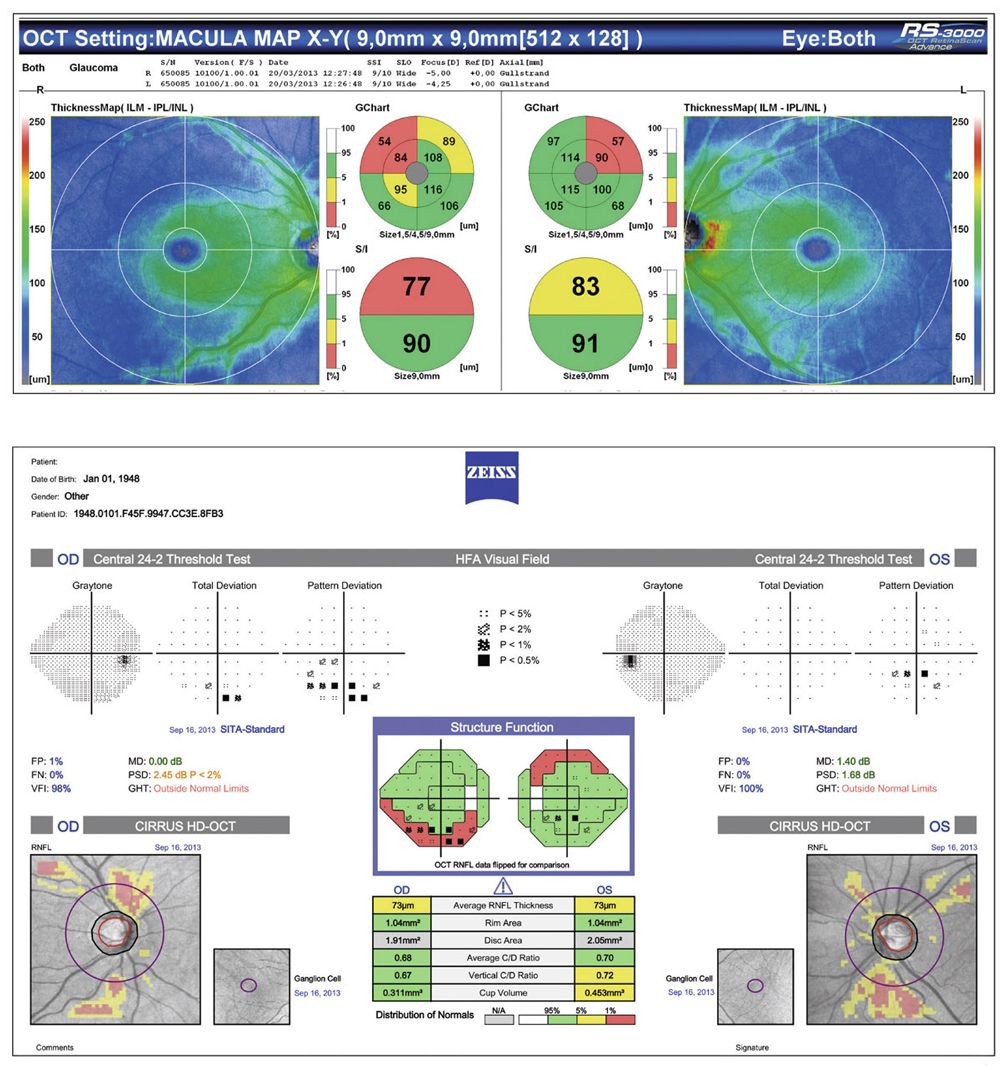
The report often looks like a “map.” Lighter areas represent better sensitivity, while darker areas indicate reduced sensitivity. The doctor interprets the result while taking into account the reliability of the test, including fixation and response errors, as well as the clinical context.

  • Sensitivity map: Shows where vision is more or less sensitive.
  • Reliability: The test indicates whether fixation and responses were consistent.
  • Follow-up: Comparisons over time are very important, especially for glaucoma.
Visual field testing in Sousse, Tunisia

Frequently asked questions

Can I drive after a visual field test?

Usually yes, because pupil dilation is not always required. If dilation is planned on the same day for another examination, driving may be more difficult, and the team will advise you accordingly.

Why does the test sometimes need to be repeated?

Because it is a “functional” test. Fatigue, stress, or poor fixation may influence the result. Repeating the examination helps obtain a more robust and comparable measurement.