Back to top
+216 73 277 600
Examinations Surgery Technology Expertise
Eye surgery Blepharoplasty Blepharoplasty Book an appointment

Blepharoplasty surgery

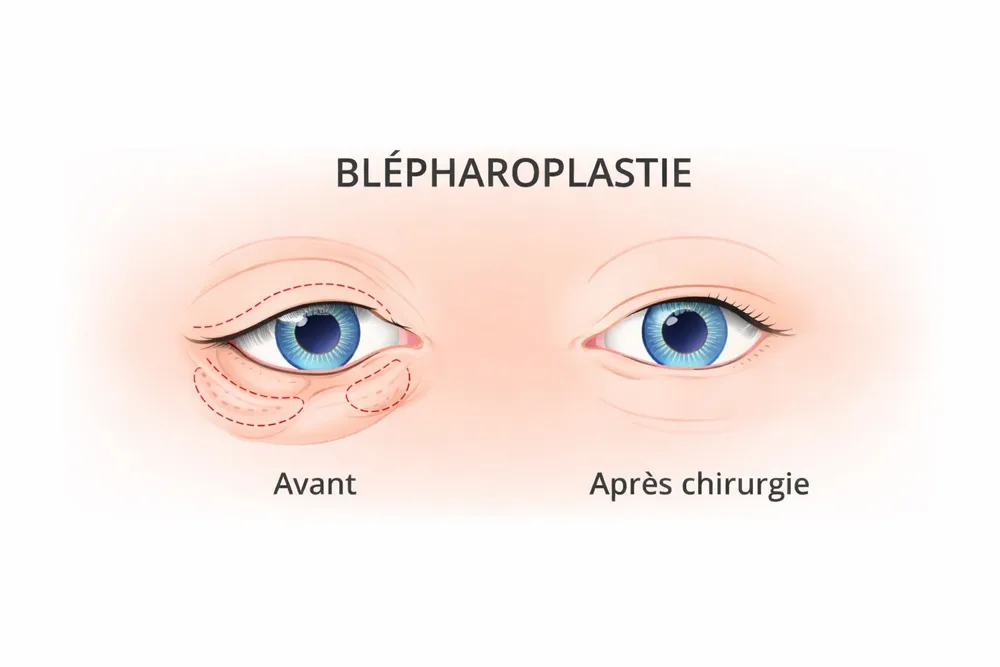
The blepharoplasty is eyelid surgery that corrects excess skin, laxity, and/or eyelid bags. It may have a functional objective when heavy eyelids reduce the visual field and an aesthetic objective by creating a more open, rested appearance. At Les Oliviers Eye Clinic in Sousse, Tunisia, the approach is primarily medical: protect the eye, respect anatomy, and aim for a natural result.

Purpose Lighten the eyelid and open the eyes
Principle Targeted removal of skin / bags
Key point Discreet scar + follow-up
When should blepharoplasty be considered?

Over time, eyelid skin may become thinner and looser. The upper eyelids may weigh down the appearance, while the lower eyelids may develop bags or pronounced folds. In some cases, excess skin becomes functionally troublesome by reducing the upper field of vision and requiring the eyebrows to be raised to compensate.

  • Heavy upper eyelids: A hooded sensation and tired appearance.
  • Reduced visual field: Difficulty looking upward and forehead fatigue.
  • Eyelid bags: Beneath the eyes, accentuating a tired appearance.
  • Asymmetry: One eyelid is heavier than the other or the folds differ.
Blepharoplasty surgery in Sousse, Tunisia
The ideal candidate is not someone who wants to “change their face,” but someone seeking a lighter appearance while respecting the eye’s natural protective function.

The principle of the operation

Blepharoplasty involves carefully removing a measured amount of excess skin and, when indicated, treating eyelid bags. The procedure is precise: the aim is to lighten the eyelid without weakening eye closure. The incision is generally placed in the natural fold of the upper eyelid, making the scar discreet once healing is complete.

  • Upper eyelid: Targeted removal of skin and, sometimes, treatment of fatty tissue when indicated.
  • Lower eyelid: Treatment of bags and laxity according to individual anatomy.
  • Priority: Preserve the ocular surface and comfortable eyelid closure.
Blepharoplasty and ptosis: what is the difference?

Blepharoplasty treats excess skin or bags. Ptosis is an eyelid that sits too low because of the lifting mechanism. Both may be present at the same time, and the examination helps determine a coherent treatment strategy.

How the operation is performed

The operation is performed in the operating room under suitable anesthesia, often enhanced local anesthesia and sometimes general anesthesia depending on the circumstances. The surgeon makes precise markings, places the incisions in natural areas, removes excess skin and treats the bags if necessary, then closes with fine sutures.

  • Marking: Precise markings for a symmetrical result.
  • Discreet incisions: In the eyelid fold or other appropriate areas.
  • Tailored correction: Removal of skin and bags according to your anatomy.
  • Final check: Symmetry, closure, and protection of the eye.
Blepharoplasty surgery in Sousse, Tunisia

Postoperative recovery

Swelling and bruising are common after blepharoplasty, especially during the first few days. A pulling sensation may occur. Local care, including ointment or eye drops according to the prescription, and follow-up checks support regular healing. The result improves progressively as the appearance settles over several weeks.

  • Swelling / bruising: Temporary, with gradual reduction.
  • Care: Hygiene, ointment or eye drops, and protection according to instructions.
  • Return to activities: Gradual, according to comfort and occupation.
  • Seek medical advice if you experience: significant pain, loss of vision, bleeding, or persistent intense redness.
A successful result is not “tight.” It is harmonious, natural, and comfortable for the eye.

Frequently asked questions

Is the scar visible?

The upper-eyelid scar is generally placed in the natural fold and gradually fades. Its visibility also depends on the skin, healing, and postoperative care.

Does blepharoplasty improve vision?

If excess skin was reducing the upper visual field, surgery may provide a functional benefit. Otherwise, the improvement is mainly aesthetic and related to comfort.