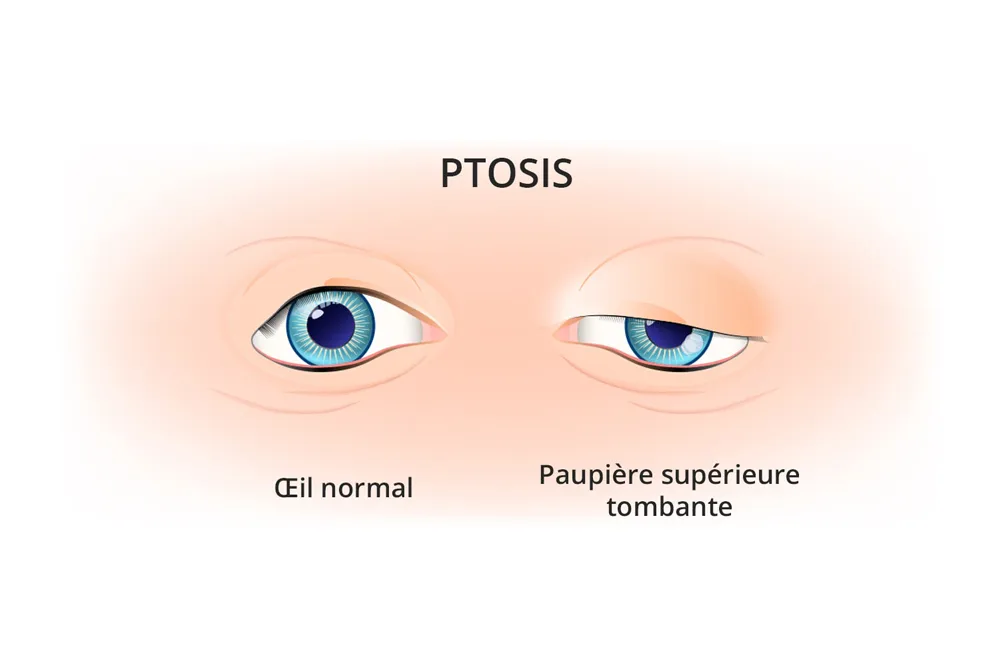
The ptosis is a condition in which the upper eyelid droops lower than normal. It may be subtle, but it can also cover part of the pupil and reduce the visual field, create a tired appearance, and lead to compensation by the forehead, with raised eyebrows or headaches. At Les Oliviers Eye Clinic in Sousse, Tunisia, ptosis surgery is approached as a precision procedure designed to achieve harmonious eyelid alignment while protecting the eye and its surface.
Ptosis surgery
How can ptosis be recognized?
Ptosis is not merely an aesthetic concern. It may have a genuine functional effect , particularly when it interferes with near or distance vision. Some patients notice it mainly in photographs, while others experience fatigue at the end of the day.
- Lower eyelid position: One eye appears “smaller” or less open.
- Upper-field visual difficulty: A hooded sensation and reduced visual field.
- Forehead compensation: Eyebrows are frequently raised, causing forehead fatigue.
- Progressive asymmetry: More noticeable over time or at the end of the day.
Why operate?
Ptosis surgery is proposed when the eyelid interferes with vision, creates marked asymmetry, or causes daily fatigue. The aim is to raise the eyelid to an appropriate height and obtain a natural result that respects the patient’s appearance.
- Improve the visual field: Less of a “curtain” over vision.
- Improve comfort: Reduce fatigue and forehead compensation.
- Create a more harmonious appearance: Better symmetry and a more rested expression.
- Protect the ocular surface: Avoid excessive opening that could dry the eye.
How the operation is performed
Ptosis surgery corrects the condition by acting on the mechanism that raises the eyelid. Depending on the examination, the surgeon adjusts the tension of the levator muscle or other involved structures. The procedure is performed through a discreet incision, generally placed in the natural eyelid fold so that the scar is as inconspicuous as possible.
Will surgery “change my appearance”?
The aim is not transformation, but restoration: opening the eyelid enough to improve vision and symmetry while preserving your expression and the eye’s protective function.
Postoperative recovery: what is usual
Swelling and bruising may occur after the operation, which is common. A pulling sensation is also possible. Local care and follow-up support regular healing and a more stable result. The final appearance gradually refines as the tissues settle.
- Swelling / bruising: Gradually decrease over several days or weeks.
- Care: Ointment or eye drops according to the prescription, together with hygiene and protection.
- Follow-up appointments: To monitor symmetry, healing, and ocular comfort.
- Seek medical advice if you experience: significant pain, loss of vision, bleeding, or persistent intense redness.
Frequently asked questions
Is surgery performed under general anesthesia?
The type of anesthesia is selected according to age and circumstances. Enhanced local anesthesia is often used in adults, while general anesthesia is more common in children to ensure comfort and precision.
Can ptosis return?
Depending on the original cause, the condition may change over time. Follow-up is used to assess stability and adapt treatment if necessary.