The glaucoma is a disease of the optic nerve. It becomes progressively damaged, often without symptoms. The purpose of treatment, whether medication, laser, or surgery, is not to “improve blurred vision” but to protect the remaining vision by controlling intraocular pressure and facilitating drainage of the aqueous humor, the eye’s natural fluid.
Glaucoma surgery
When is glaucoma surgery considered?
An operation is considered when glaucoma continues to progress despite well-followed treatment or when the eye requires a greater reduction in pressure. Sometimes surgery is proposed earlier, depending on the type of glaucoma, the condition of the optic nerve, and the level of risk.
- Pressure remains too high despite eye drops: Or long-term treatment is difficult to tolerate.
- Documented progression: Visual field testing and/or OCT show worsening.
- A lower target pressure: When the optic nerve is fragile, a stricter target may be required.
- Personalized decision: Every eye has its own history, so the treatment plan is tailored individually.
Our two techniques: trabeculectomy and YAG laser
At Les Oliviers Eye Clinic in Sousse, Tunisia, two complementary approaches are used. They follow different principles: one is filtering surgery,Trabeculectomy, while the other is a YAG laser treatment generally performed during an outpatient visit and directed at certain mechanisms that raise intraocular pressure.
Trabeculectomy
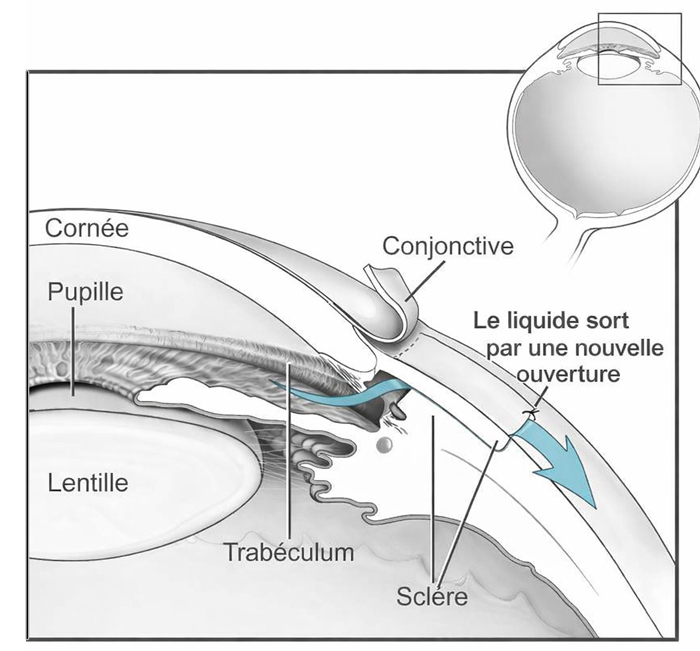
The trabeculectomy creates a new drainage pathway for the eye’s fluid. In practical terms, the surgeon creates a passage that allows the aqueous humor to drain into a small filtration area beneath the conjunctiva, commonly called a filtering bleb. The aim is to obtain a significant and stable reduction in pressure.
- When? When glaucoma is insufficiently controlled and a substantial pressure reduction is needed.
- Where? In the operating room under suitable anesthesia.
- Follow-up: Close follow-up is required initially because the result of this surgery must be actively managed.
YAG laser
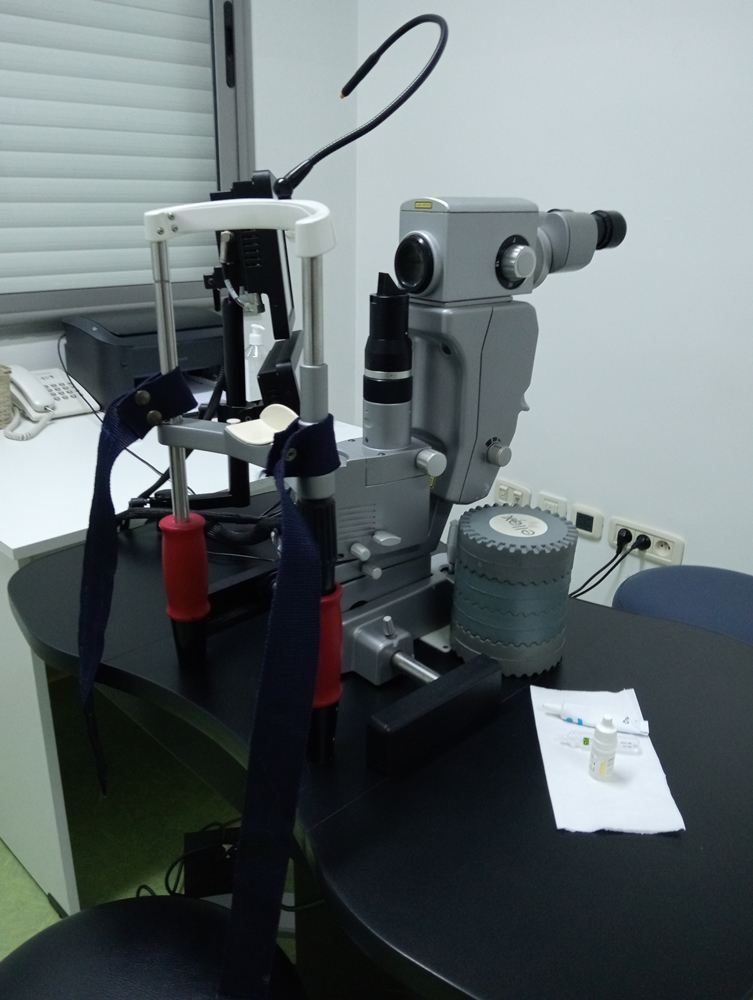
The YAG laser , or Nd:YAG laser, is used in ophthalmology to perform highly precise procedures. In glaucoma, it is often used for peripheral iridotomy: a tiny opening is created in the iris to improve internal fluid circulation, especially when the drainage angle is narrow or at risk of closing.
- When? Depending on the type of glaucoma and the configuration of the drainage angle.
- How? A laser procedure, usually performed during an outpatient visit with anesthetic eye drops.
- Afterwards: Temporary blurred vision or glare may occur, and intraocular pressure is checked.
Recovery and precautions: what really matters
A successful procedure also depends on good postoperative care. Postoperative eye drops, including anti-inflammatory and sometimes antibiotic drops, are essential. Follow-up is used to monitor pressure, healing, and the effectiveness of the procedure. During recovery, patients are generally advised not to rub the eye and to follow activity restrictions.
- Follow-up appointments: They are not optional; they are essential for a safe result.
- Eye drops: Use them at regular times for the prescribed duration.
- Seek prompt medical attention if you experience: significant pain, sudden loss of vision, marked redness, nausea, or intense halos.
Frequently asked questions
Will I be able to stop all my eye drops?
Sometimes the number of drops is reduced, sometimes they are stopped, and sometimes some treatment continues. This depends on the eye and the pressure achieved. The aim is not necessarily “no drops,” but a safe pressure and a stable optic nerve.
Is YAG laser treatment painful?
Most patients mainly notice bright lights and moderate discomfort rather than pain. Anesthetic eye drops are generally used, followed by a pressure check according to the protocol.
Once I have surgery, am I “cured”?
Glaucoma is a chronic disease, so the aim is primarily control. Surgery can stabilize the condition, but long-term follow-up remains essential.