Back to top
+216 73 277 600
Examinations Surgery Technology Expertise
Eye surgery Laser YAG Laser YAG Book an appointment

YAG laser iridotomy | Glaucoma treatment

The YAG laser iridotomy is a key treatment for certain forms of narrow-angle glaucoma. It is used to perform a peripheral iridotomy , which is a tiny opening in the iris, the colored part of the eye. In glaucoma, this procedure primarily helps secure fluid circulation inside the eye and reduce the risk of angle closure in selected patients. The objective is clear: prevent a rise in pressure that could endanger the optic nerve.

the objective is to protect the optic nerve by preventing dangerous increases in intraocular pressure.

Important to know: YAG laser iridotomy is not intended to repair damage that is already present, but to prevent irreversible worsening of glaucoma.
Purpose Prevent or treat a narrow drainage angle
Principle Tiny opening in the iris
Key point Quick procedure with important follow-up
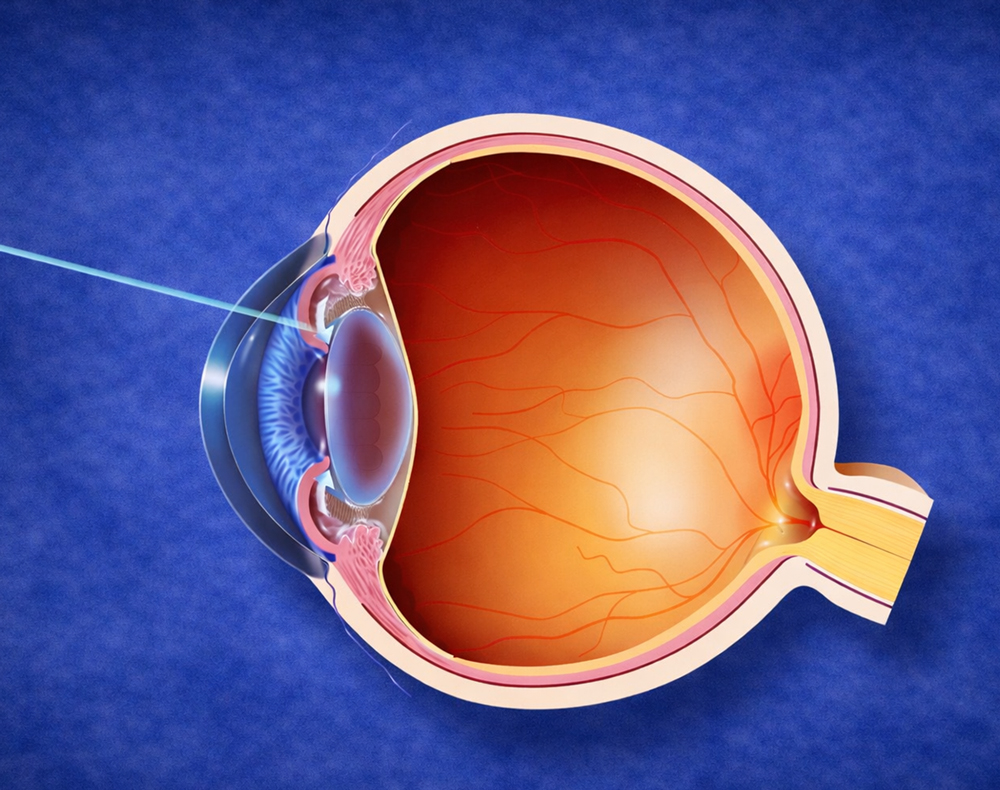
The role of YAG laser treatment in glaucoma

In narrow-angle glaucoma, the space through which the aqueous humor drains is reduced. The iris may move forward and suddenly block this angle, causing a rapid rise in pressure. This situation can be serious for the optic nerve.

YAG laser iridotomy creates a tiny peripheral opening in the iris. This passage allows fluid to circulate freely between the back and front of the iris, thereby reducing the risk of angle closure and helping stabilize pressure.

  • Narrow angle / risk of closure: Often detected during examination by gonioscopy or angle imaging.
  • Prevention of an acute attack: When the doctor considers the risk significant, even if there is no current pain.
  • After the other eye has been affected: Preventive treatment may sometimes be indicated if the anatomy is similar.
  • Personalized decision: This laser is not performed automatically; it is used when it is useful and justified.

How is a YAG laser iridotomy performed?

The treatment is performed during an outpatient visit without hospitalization. After anesthetic eye drops are instilled, the doctor uses a microscope to apply highly targeted laser pulses to a peripheral area of the iris, often beneath the upper eyelid so that the opening remains discreet. The procedure is short, precise, and generally well tolerated.

YAG laser iridotomy in Sousse, Tunisia

Risks and side effects

The great majority of patients tolerate iridotomy very well. The most common effects are temporary and may include discomfort, stinging, and light sensitivity. More rarely, pressure may rise immediately afterwards, which is why checks are performed. Your ophthalmologist will explain what is relevant to your eye.

After YAG laser treatment: follow-up and monitoring

Monitoring after iridotomy is essential. Intraocular pressure is checked and treatment is adjusted if necessary. In most cases, patients resume their activities quickly.

Frequently asked questions

Does iridotomy replace glaucoma treatment?

Not necessarily. It treats a specific mechanism, such as a narrow angle or pupillary block. Depending on the type of glaucoma and the target pressure, eye drops or other treatments may still be required.

Does the opening remain patent permanently?

It is created to remain open. In rare cases, it can narrow, and additional laser treatment may be discussed. Follow-up is specifically used to confirm that it remains effective over time.

Is the procedure painful?

Most patients describe moderate discomfort, mainly bright flashes. Anesthesia is provided with eye drops. Tell us if you feel anxious so that the team can adapt the procedure and make the experience as comfortable as possible.